

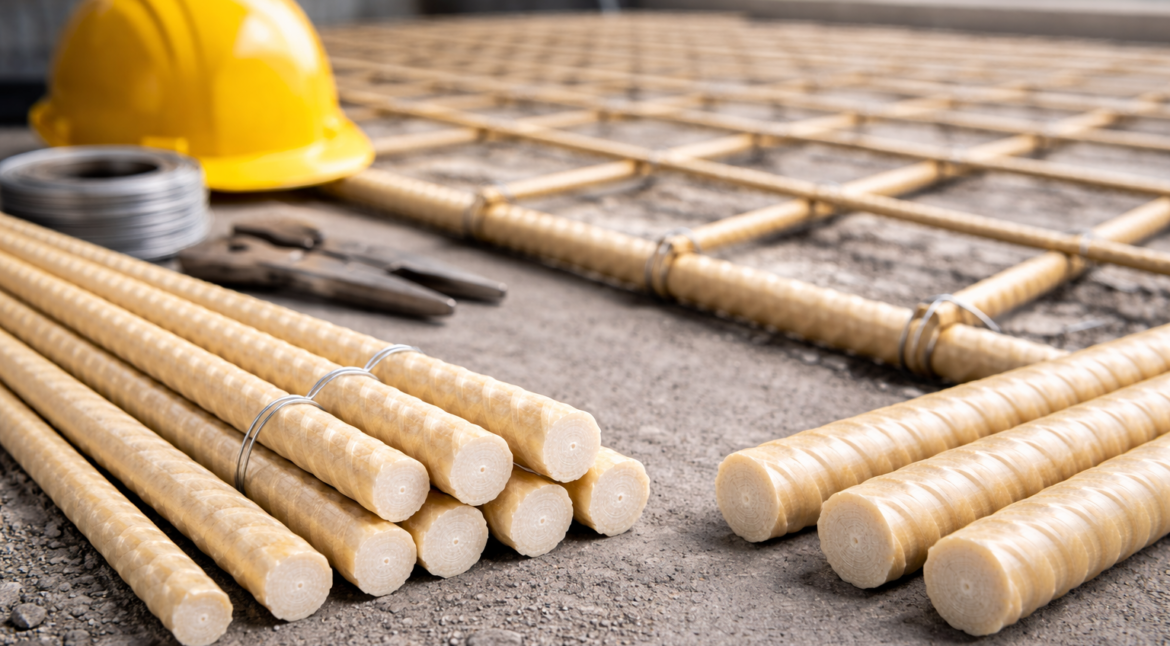
After using old-fashioned materials for a long time, the building industry has changed a lot over the years, switching from those to more modern options that are made to last. Because of worries about corrosion, high maintenance costs, and the long life of structures, steel rebar has not been the standard material for reinforcement for many years. This has led businesses to look for better options. These days, corrosion-resistant materials are becoming more and more important in building projects, especially those that will be exposed to water, chemicals, and coastal conditions.
Our market for GFRP Rebar Manufacturer in India has grown very quickly because of this growing need. As a high-performance alternative to steel support, GFRP (Glass Fibre Reinforced Polymer) rebar is getting more attention. GFRP is replacing steel in many industries because it is lighter, more durable, and lasts longer. GFRP rebar is becoming a reliable and future-ready way to strengthen infrastructure in India, like roads, bridges, marine structures, smart infrastructure, and green building.
What is GFRP Rebar?
Fibreglass reinforced plastic rebar, or GFRP rebar, is what it sounds like. Combining high-strength glass fibres with polymer resin, it makes a hybrid reinforcement material. If GFRP rebar is exposed to water, chemicals, or harsh weather, it does not rust or corrode like steel support bars do.
It is mostly made of fibreglass and thermosetting glue, which are called “primary components.” Its strong strength comes from the fibreglass, and its environmental protection comes from the resin that holds the fibres together. After putting these two things together, you get a strong reinforcement material that can be used in tough building sites.
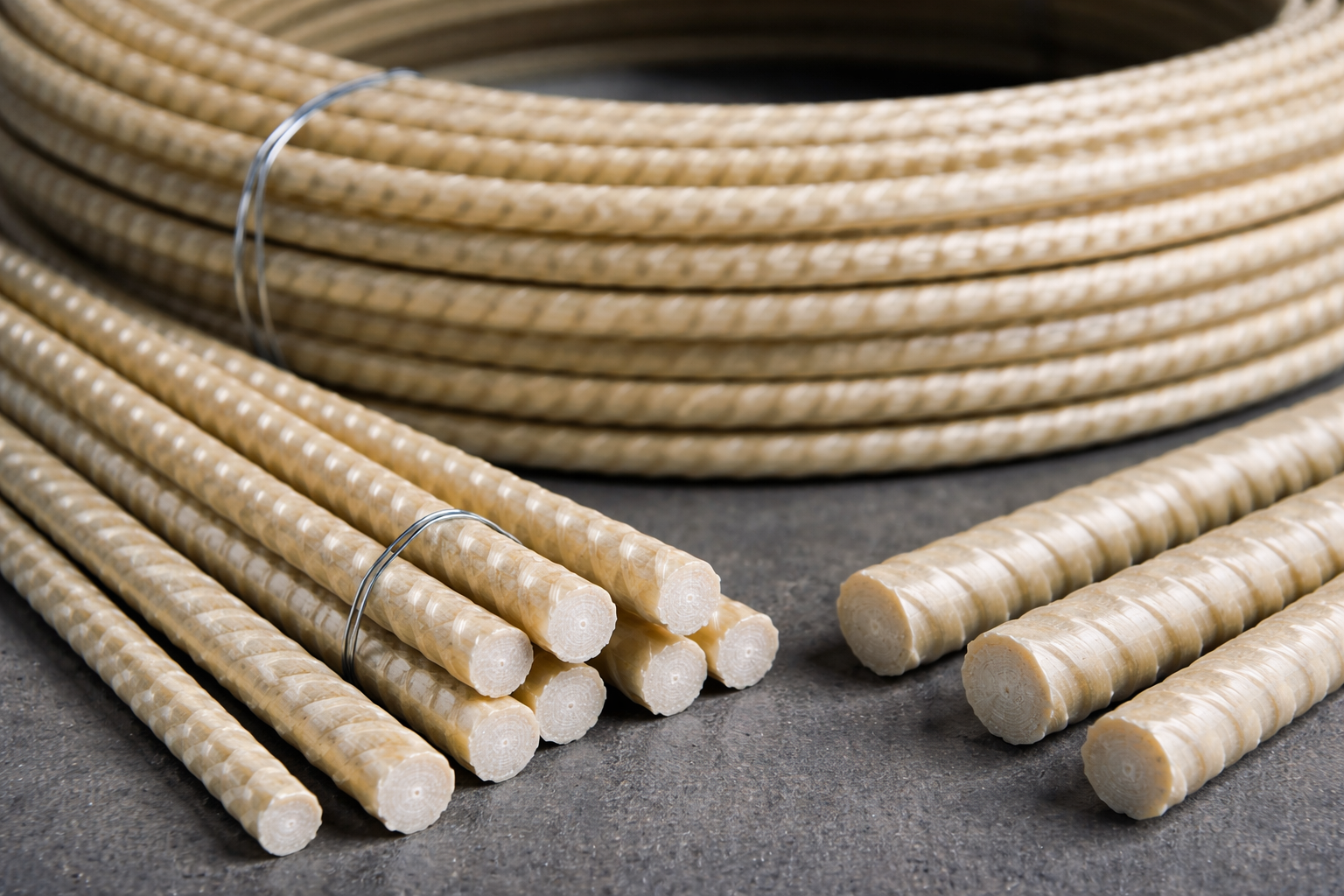
How GFRP Rebar is Manufactured
One of the most popular ways to make GFRP Rebar in India is through a process called pultrusion. Long glass fibres are pulled through a resin bath in this way, and then they are shaped into bars while the temperature is controlled. A consistent, high-performing structure is made possible by the process.
For foreign compliance, the best manufacturers also follow strict standards for quality control and testing. During the manufacturing process, several factors are closely watched, including tensile strength, dimensional accuracy, bonding performance, and durability.
Key Properties of GFRP Rebar
Many times, GFRP rebar is better than standard steel reinforcement because it has a number of advanced properties. The fact that it is light makes it easy to move and set up. Furthermore, it has a very high resistance to rust, even in very harsh conditions. It is also very strong when pulled apart, so GFRP rebar can hold up well under big loads.
Benefits of Choosing a GFRP Rebar Manufacturer in India
Corrosion Resistance for Long-Term Durability
For many reasons, corrosion protection is one of the best things about GFRP rebar. For example, water, salts, and acids can break down steel reinforcement, which can cause cracks and damage to the structure. This problem is solved by GFRP rebar, which makes it perfect for areas near the coast, high humidity, and buildings that are exposed to chemicals.
High Strength-to-Weight Ratio
While still being very strong, GFRP rebar is a lot lighter than steel. Low shipping costs and easy handling on-site are both benefits of this high strength-to-weight ratio. The overall productivity of the job goes up because workers can install GFRP bars more quickly.
Non-Conductive & Non-Magnetic Properties
Instead of electrical and magnetic, GFRP rebar is not. MRI rooms, electrical substations, and train systems are just a few of the places where this material is useful because it doesn’t cause too much electromagnetic interference.
Cost-Effective Over Lifecycle
Many times, GFRP rebar costs more than steel at first, but it saves a lot of money in the long run. Repair and replacing costs will go down over time because the material doesn’t need much upkeep and lasts a lot longer.
Eco-Friendly and Sustainable Solution
In environmentally friendly building methods, GFRP rebar helps make structures last longer and require less upkeep. Less maintenance and replacements are needed because it doesn’t rust like steel does. This helps infrastructure projects leave less of a carbon impact.
Applications of GFRP Rebar in India
Infrastructure Projects
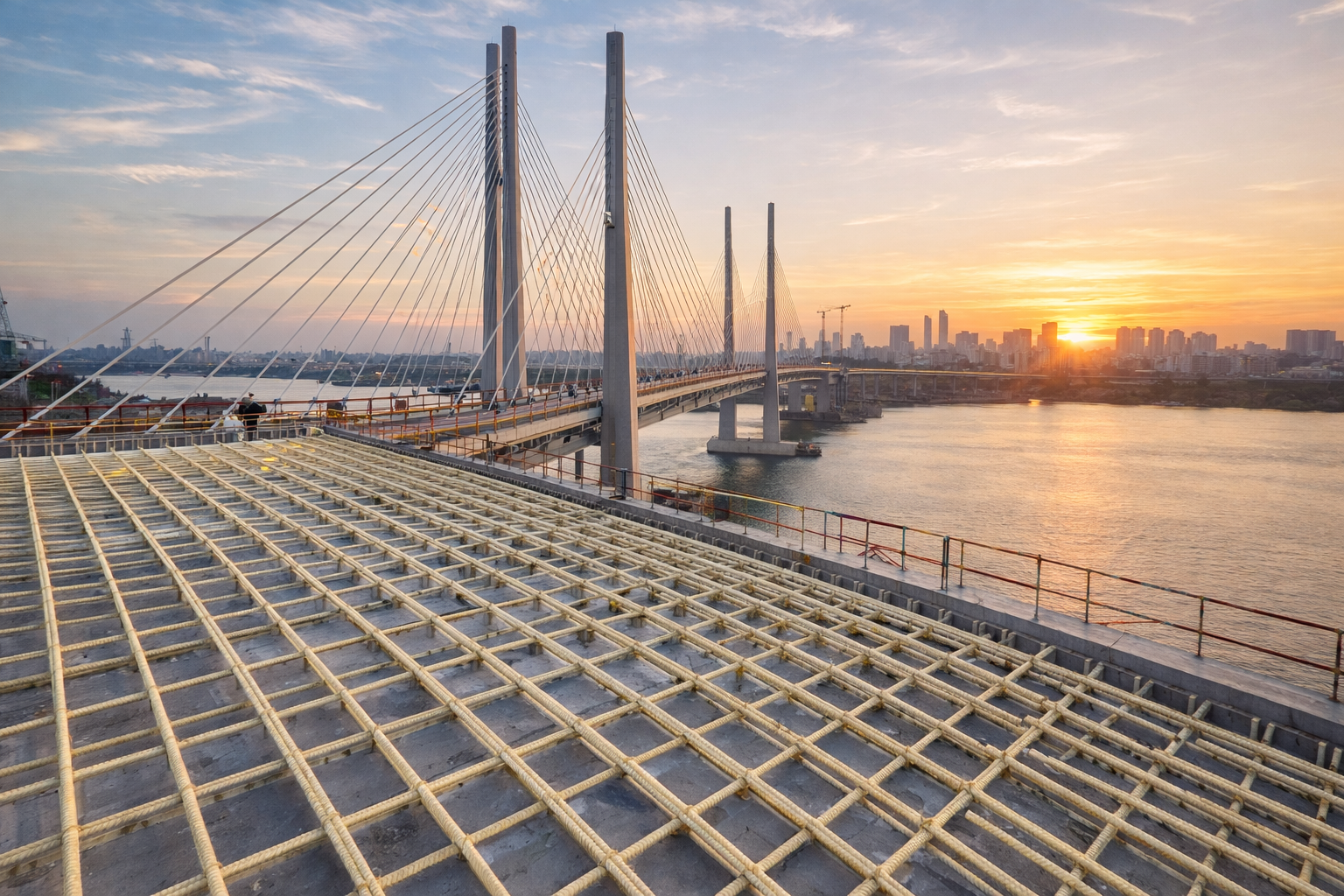
Bridges, roads, tunnels, and flyovers all over India are using GFRP rebar more and more. Strong materials that can stand up to heavy traffic and the elements are needed for these jobs.
Marine and Coastal Structures
Salinity-water corrosion can really hurt ports, docks, seawalls, and other buildings along the coast. In these kinds of conditions, GFRP rebar works really well, which is why it is a popular choice for support.
Industrial Construction
Properties are often exposed to harsh chemicals in chemical plants, garbage treatment plants, and industrial processing units. Better chemical protection makes GFRP rebar more reliable and extends the life of structures.
Residential and Commercial Buildings
Also, GFRP rebar is being used by builders in business and residential projects for foundations, slabs, retaining walls, and columns. It is easy to put quickly and will last for a long time because it is lightweight.
Specialized Uses
The fact that GFRP rebar is neither magnetic nor electric makes it very useful in places like MRI rooms, power plants, rail systems, and defence infrastructure.
GFRP Rebar vs Steel Rebar: A Comparative Analysis
Strength and Performance Comparison
When it comes to bending strength, steel rebar is known to be good, but GFRP rebar is much better. Under heavy loads, this means that buildings can work well without the risk of weakening from corrosion.
Durability and Lifespan
Especially in harsh settings, steel reinforcement can rust. When it comes to long-term solutions, GFRP rebar is the best because it doesn’t rust and keeps its shape for decades.
Cost Comparison
While steel may seem cheaper at first, the total cost of its life is higher because it needs to be maintained and fixed over time. Because it lasts longer and needs less upkeep, GFRP rebar is a better long-term investment.
Maintenance Requirements
Constant checks, repairs, and anti-corrosion treatments are often needed for steel buildings. Maintenance costs are very low for GFRP buildings because they don’t need much or any fix-ups.
Conclusion
Steel support is being replaced by GFRP rebar, which is long-lasting, doesn’t rust, is lightweight, and is recyclable. All over India, it is being used for more and more things, from building roads and bridges to commercial and industry buildings. GFRP rebar lasts longer, needs less upkeep, and works better over time than steel rebar in many ways.
Finding a reliable GFRP Rebar Manufacturer in India is important for ensure quality, dependability, and project success as the need for modern and long-lasting building materials grows. To get expert advice, price information, and custom reinforcement solutions for your future projects, contact an experienced manufacturer right away.
Contact:
Phone: +91 7508186009
Address: Derabassi – Barwala Rd, Kurawala, Punjab 140507